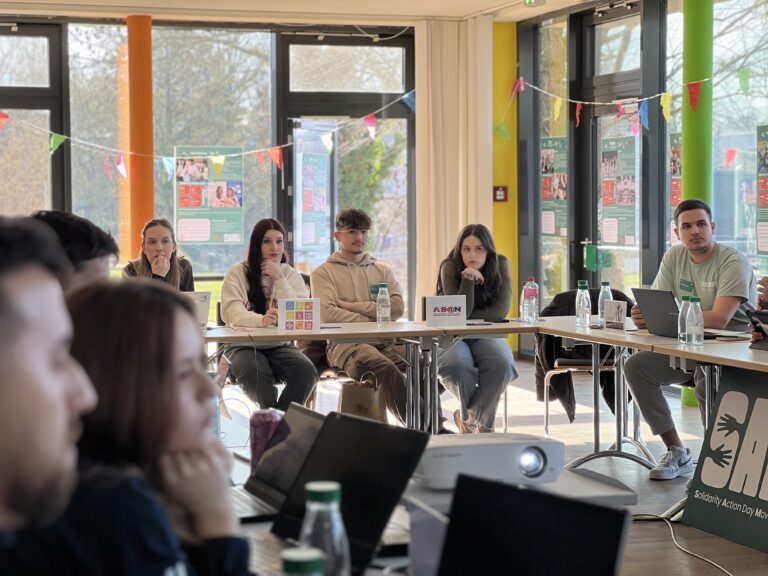
From 26 February to 2 March 2025, SAME held its Annual Congress in Ratzeburg, Germany, bringing together 26 representatives from 8 organisations and 9 countries: Germany, Belgium, Denmark, Bosnia and Herzegovina, Kosovo, Albania, North Macedonia, Armenia, and Italy. As the network’s main annual gathering, the Congress created space for exchange, democratic decision-making, and joint reflection on the future direction of SAME.
Within the framework of the Annual Congress, SAME also held its General Assembly and Council Meeting. The General Assembly focused on key governance responsibilities, including the approval of the annual plan and budget for 2025, discussion of statutory changes, and the election of new Board members. The Council Meeting created additional space for decisions related to the wider development of the network, including leadership changes and coordination structures. Together, these formal bodies allowed member organisations to directly shape the direction of SAME through participatory and youth-led decision-making.
Beyond formal governance, the Congress also served as an important space for networking, learning, and organisational exchange. Participants shared updates from their organisations, reflected on challenges and good practices, and took part in sessions that supported leadership, communication, and strategic thinking. According to the event evaluation, participants particularly valued the opportunity to build new connections across organisations and countries, with many highlighting both the interactive programme and informal networking moments as important parts of the experience.
The main outputs of the event were the successful implementation of the Annual Congress as a shared governance and exchange space, the formal decisions taken through the General Assembly and Council Meeting, the election of a new Board, and the approval of key plans and governance changes for the coming period. The main outcomes were stronger engagement within the network, increased confidence in SAME’s democratic processes, and a stronger basis for cooperation, leadership, and shared responsibility across member organisations.